Qatalog’s Conditional Workflows
At Qatalog, workflows were one of the platform’s most used features, with ~60% of customers relying on them. I led the redesign of the workflow experience to support branching logic (conditionals), a long-requested capability that would enable users to create more powerful automations.
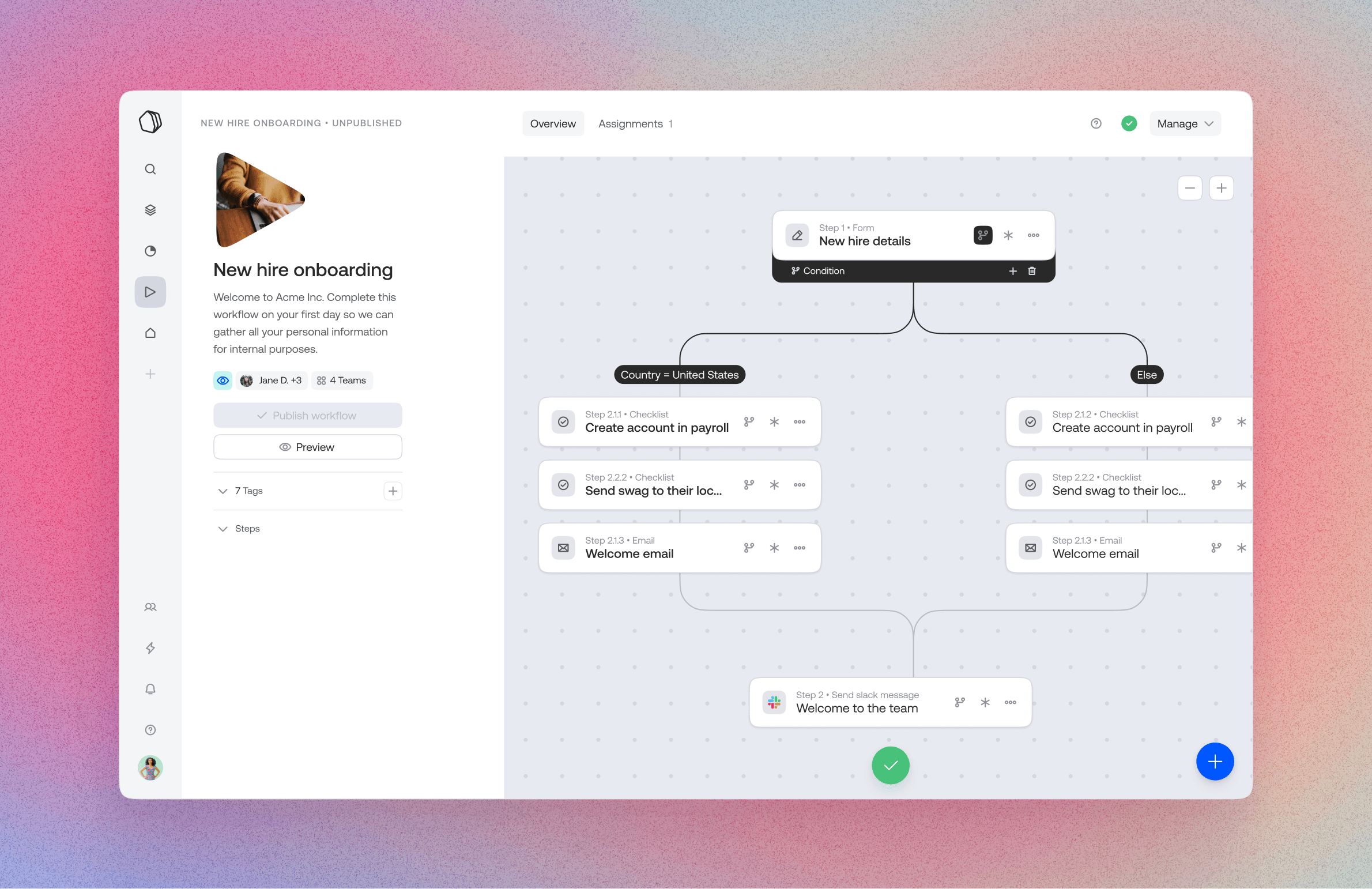
Problem and Context
Workflows were critical but outdated:
The feature’s functionality was limited to simple, linear sequences.
Experiences looked almost identical for different users and different use cases.
Lack of branching limited adoption for complex enterprise use cases, so the platform was at disadvantage when compared with other workflow platforms.
Introducing complexity risked alienating less technical users > we had to be very careful or opt for a phased implementation.
Our users were mainly knowledge workers and team leads looking for ways to streamline repeated processes (everything from onboarding new employees to managing cross-functional approvals). To succeed, the solution had to be powerful yet approachable, combining enterprise-level flexibility with a modern, intuitive UX.
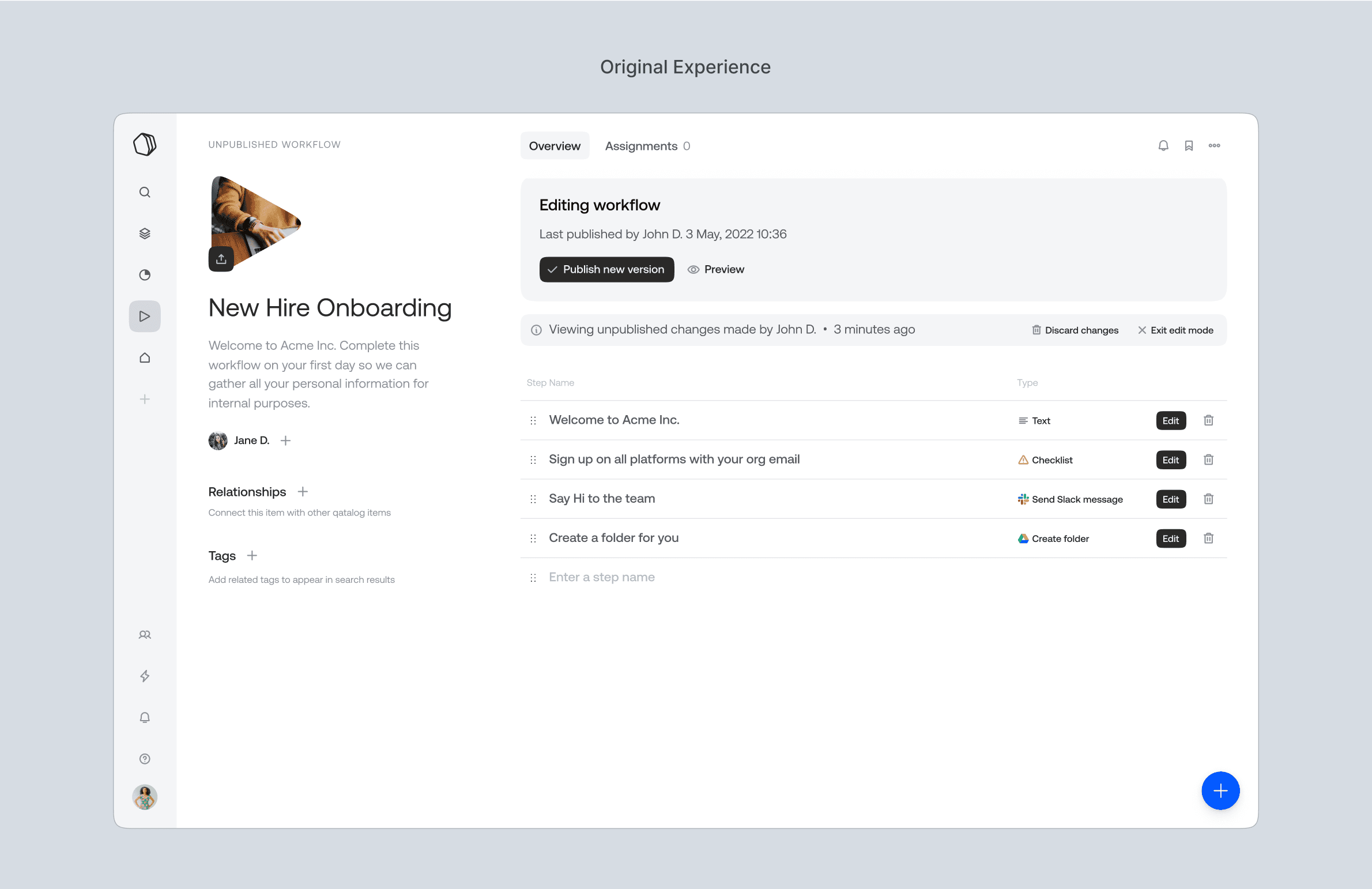
Process
Research & Discovery
During discovery, I collaborated with the Product Manager to:
Run user interviews and surveys to understand bottlenecks.
Analyse support tickets to identify common pain points.
Map out workflow variations to see where conditional logic could unlock the most value.
We also ran a heuristic evaluation of the current system, highlighting where complexity increased cognitive load and where affordances were missing. From this, we defined the strategy: enable conditional branching while preserving simplicity.
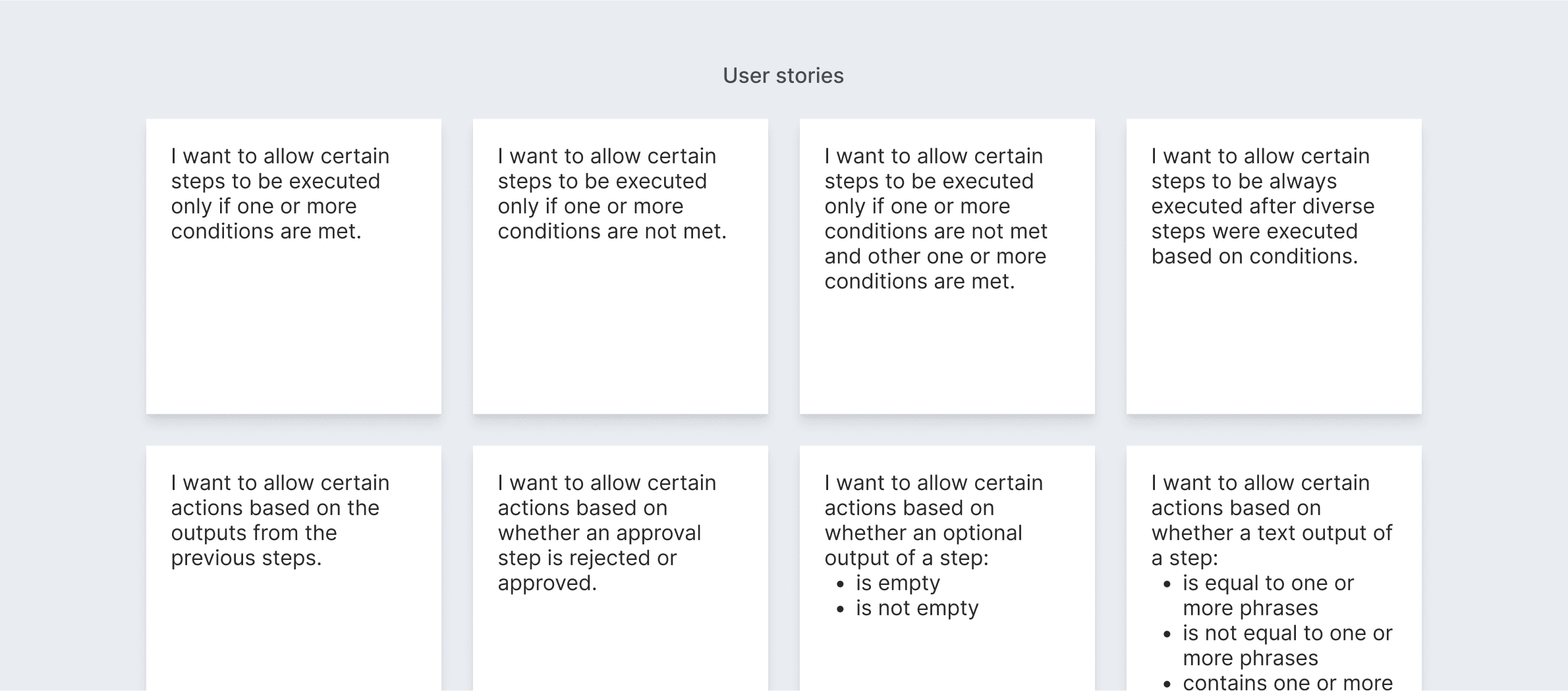
Design Exploration
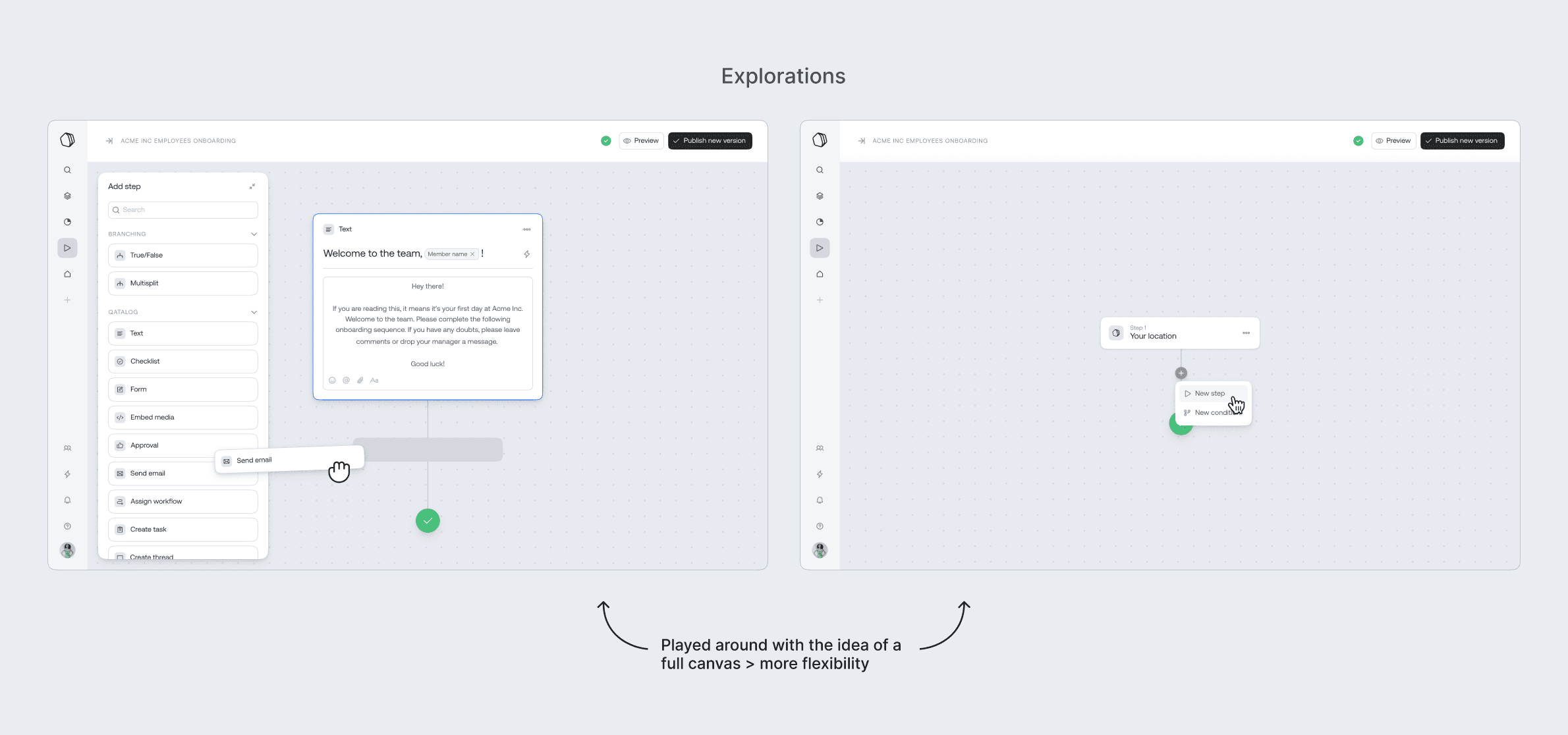
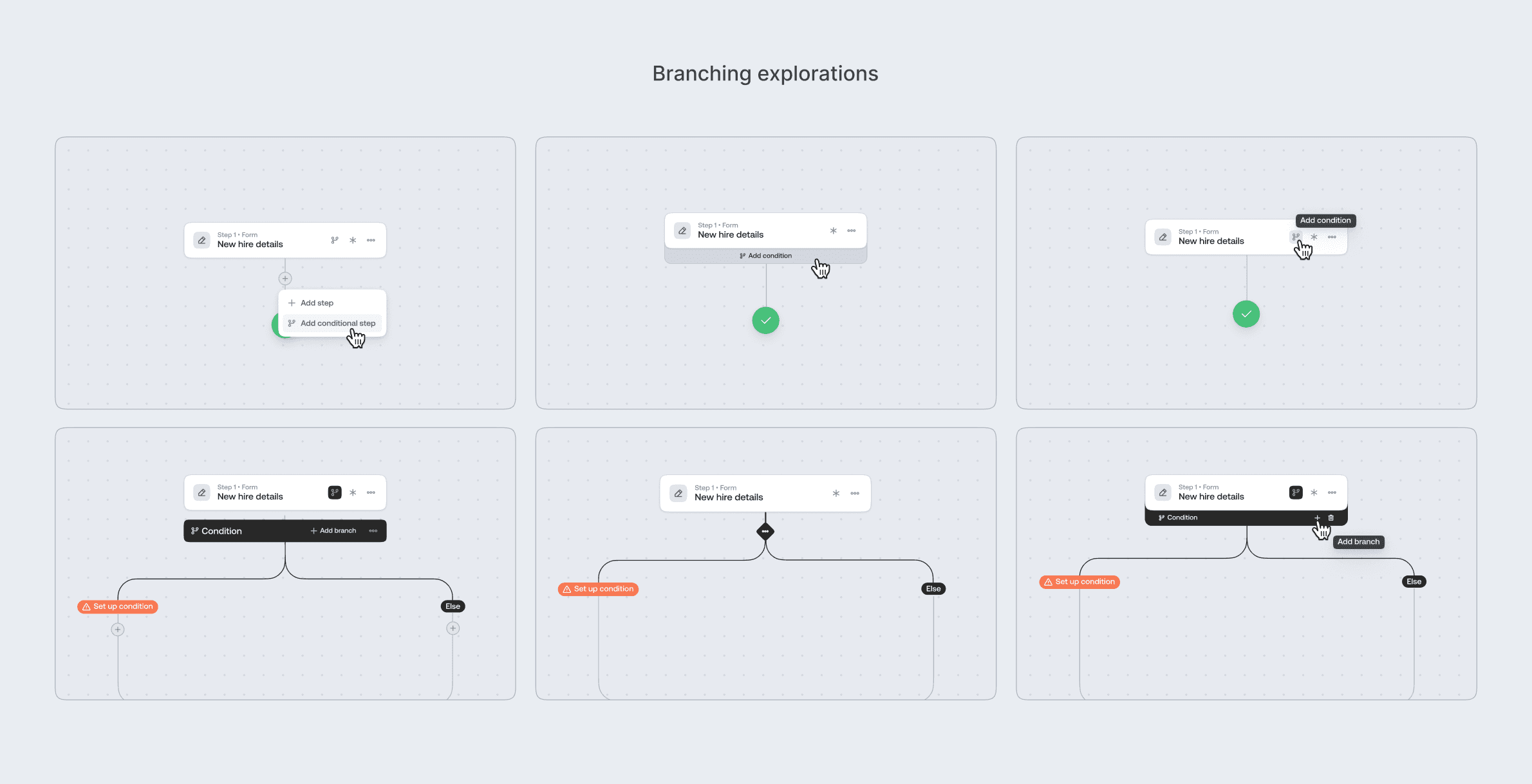
I explored several directions for visualising branching logic, aiming for a balance between power and clarity:
Card-based explorations for individual steps.
A zoomable canvas approach inspired by flowchart tools.
Inline condition builders for lightweight use cases.
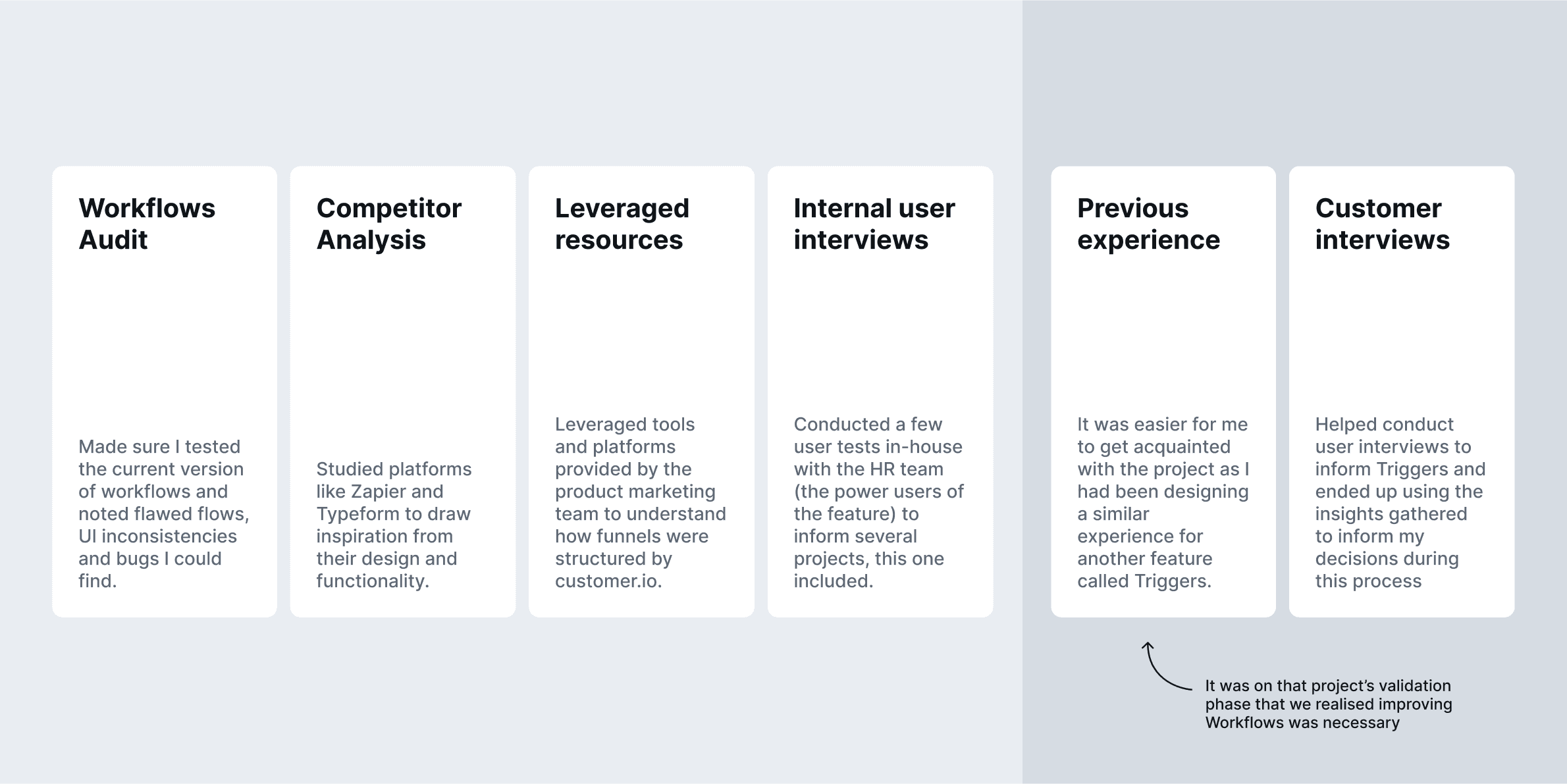
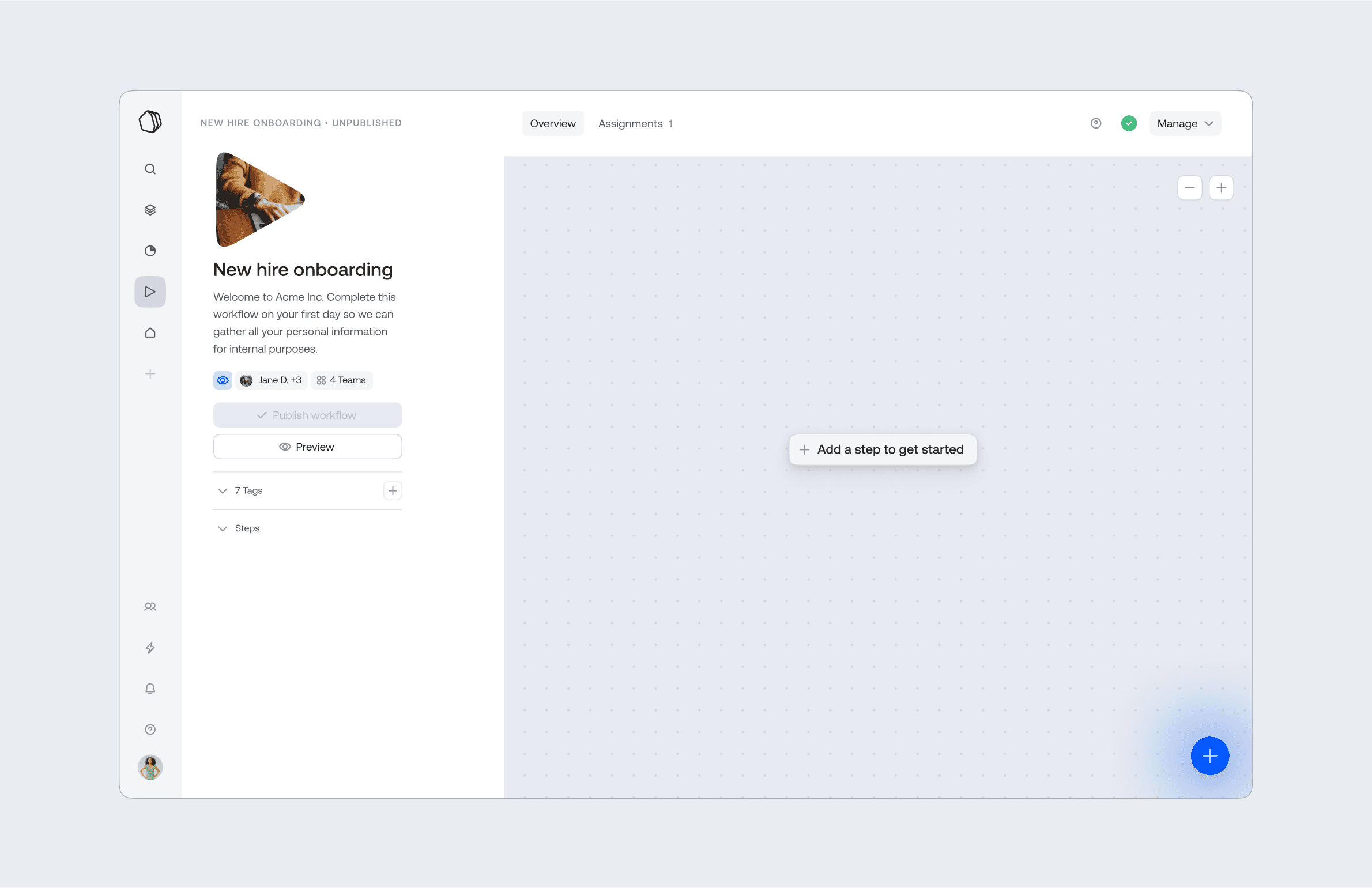
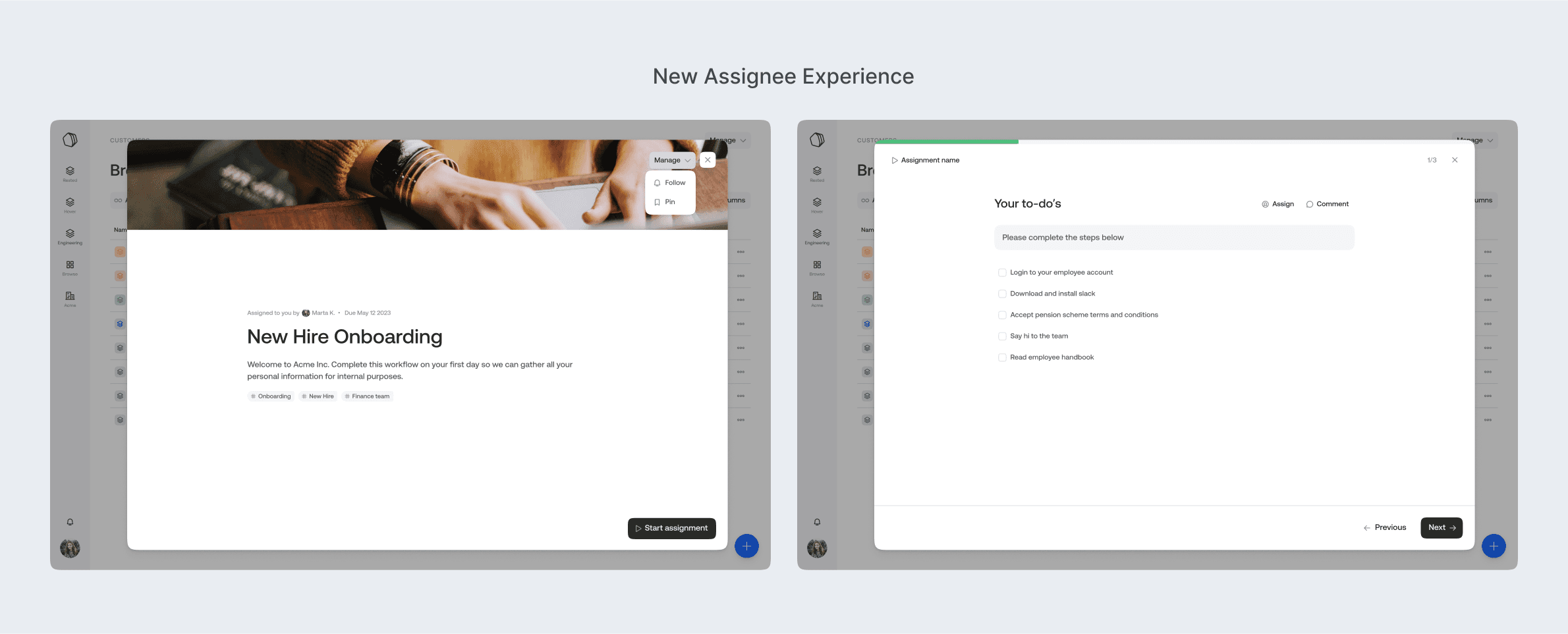
Through iteration and testing, we arrived at a canvas-based model that provided users with a clear bird’s-eye view of their workflows while keeping individual steps lightweight and easy to edit. To reduce confusion, I also designed distinct views for assignees and assignors, ensuring each role had a tailored experience. The differences were intentionally subtle at first, giving us room to test with real users and gather insights before committing to more significant divergence.
Additional design considerations included:
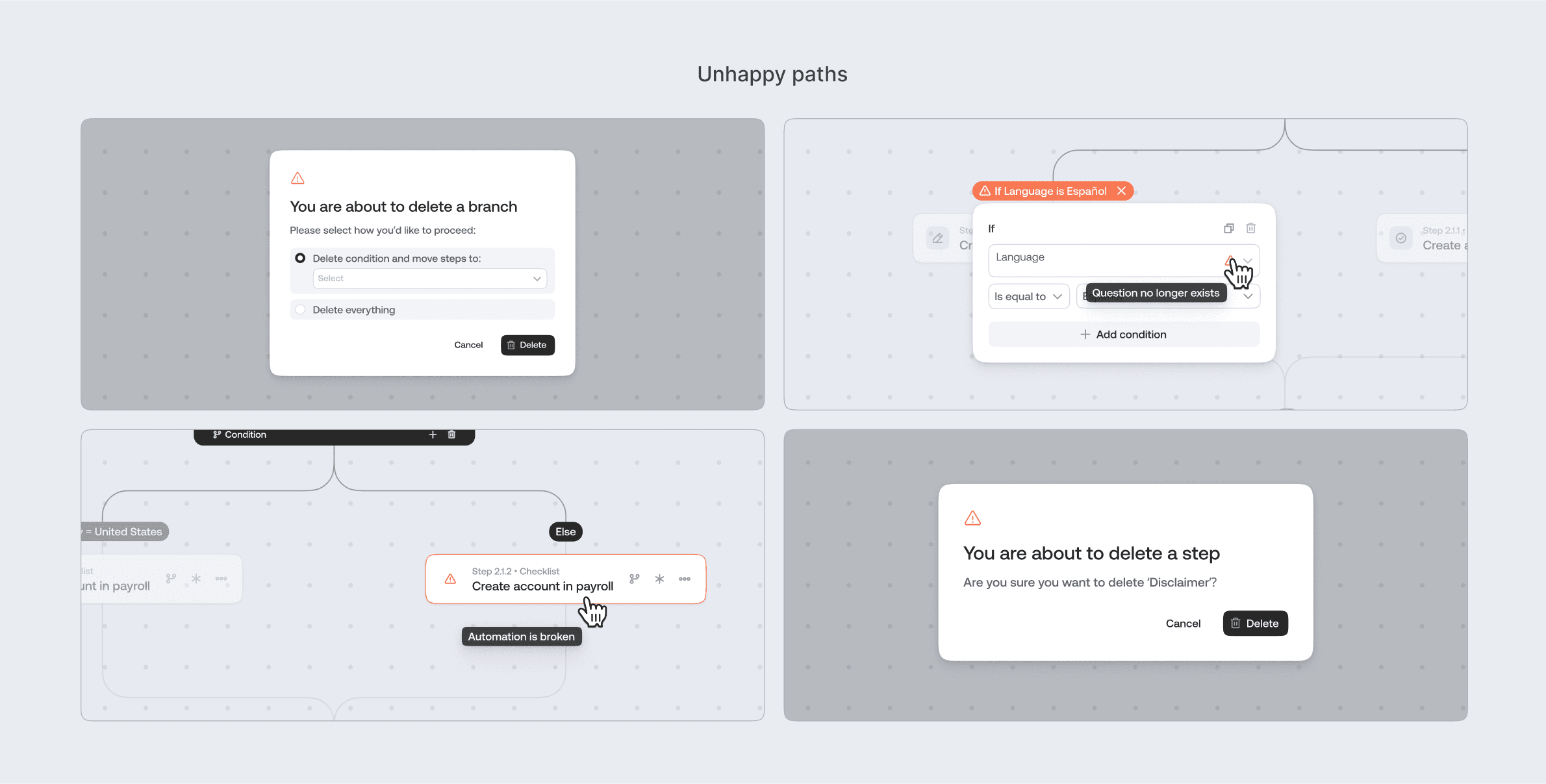
Handling unhappy paths gracefully
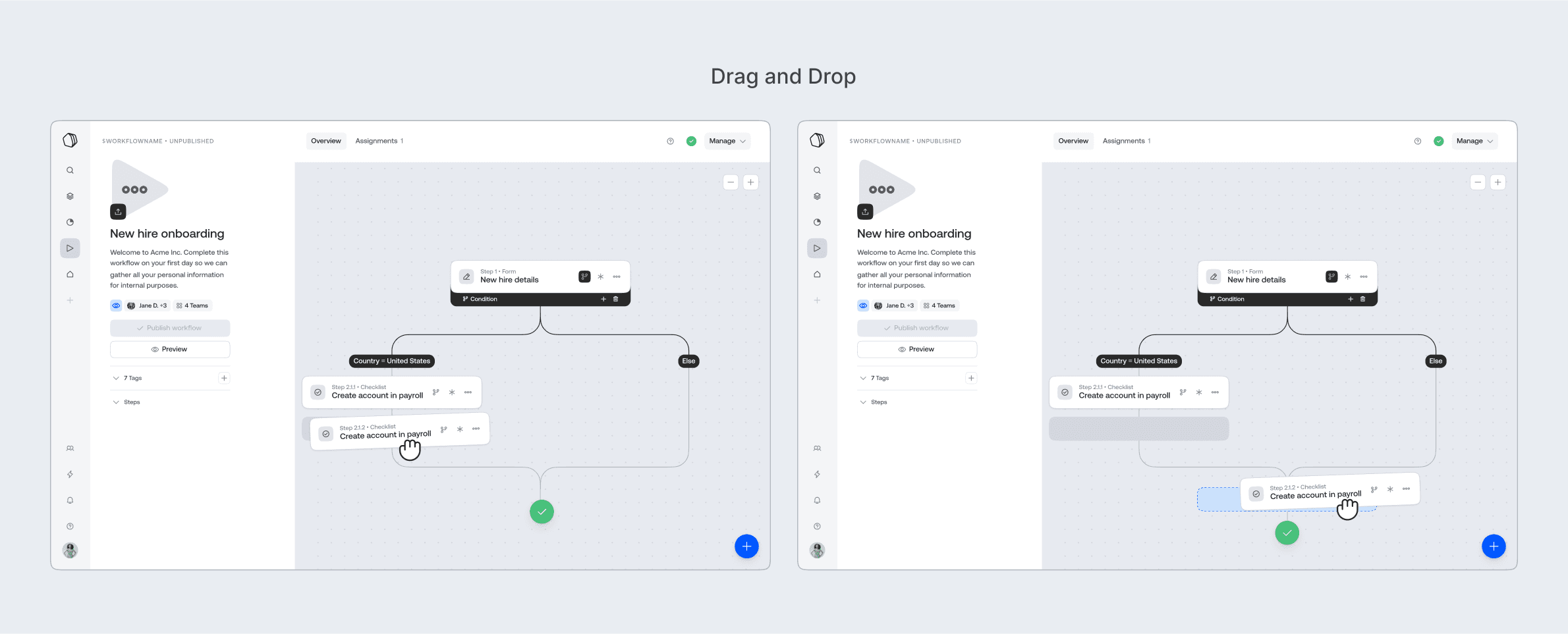
Enabling intuitive drag-and-drop reordering
Creating more robust error states to support edge cases and increase trust
Outcome and Impact
The new Conditional Workflows feature transformed one of Qatalog’s most valuable tools into a far more flexible and robust system:
Empowered users to model real-world complexity without relying on workarounds.
Increased adoption of workflows as users were able to apply them to a wider set of use cases.
Improved efficiency and accuracy, reducing errors caused by manual interventions.
Helped position Qatalog competitively against workflow automation tools, while maintaining the sleek, user-friendly design expected from a modern productivity platform.